
Affordable Housing
FLISP Subsidy South Africa: Get Up to R169 264 For Your First Home
3 min readBy Kwantu Homes
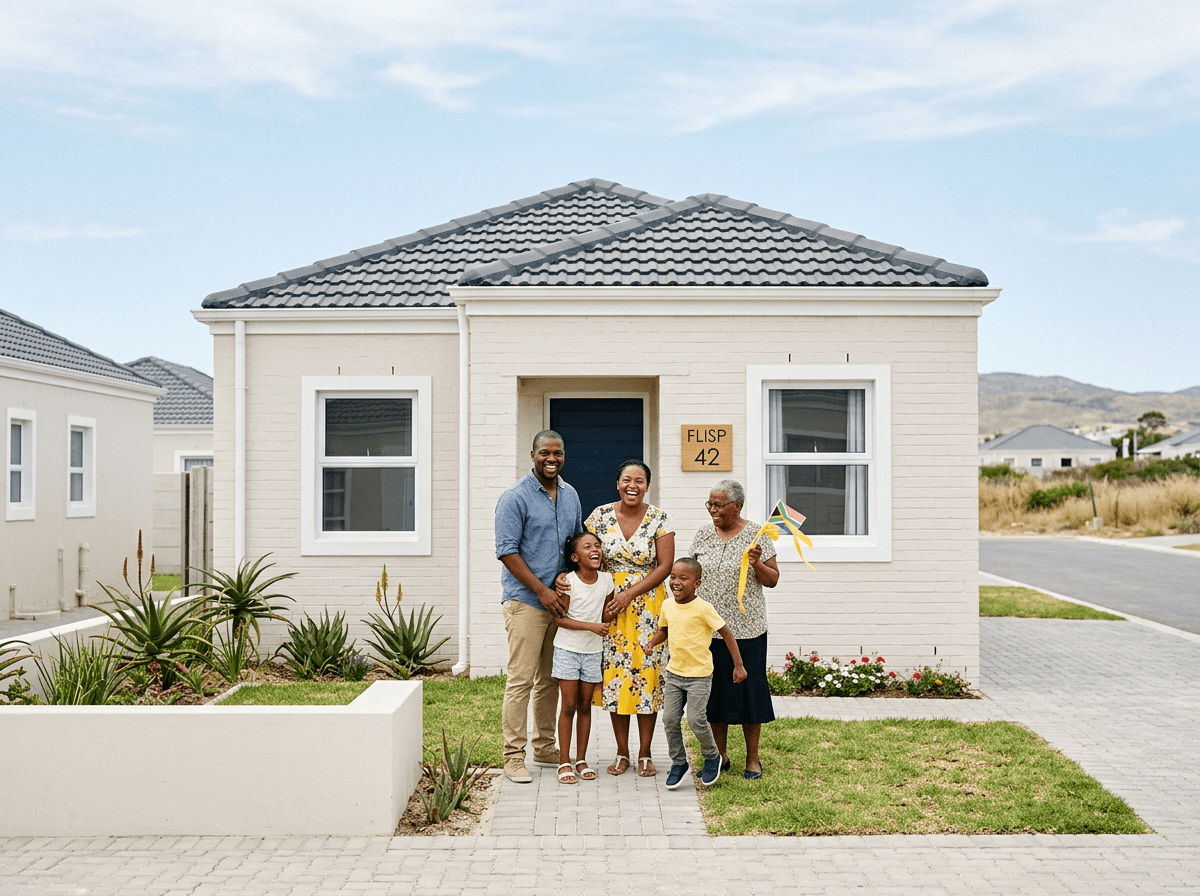
The FLISP subsidy South Africa offers is a government housing subsidy of between R38 878 and R169 264 for first-time buyers with a FLISP qualifying income between R3 501 to R22 000 a month. You do not pay it back. It reduces your home loan directly, which means a smaller monthly bond repayment for the rest of your loan term.
Here is how it actually plays out. Say you and your partner together bring home R8 000 a month. That falls inside the qualifying band. Once your bank approves you for a home loan, you apply for the subsidy and it gets paid straight to your bank, never into your own pocket. It either shrinks the amount you need to borrow or it covers your deposit, which helps the bank take your application more seriously in the first place.
The less you earn within that band, the bigger your subsidy. Someone earning closer to R3 501 a month could get around R130 000. Someone closer to R22 000 gets nearer R38 000. Either way, it is real money that opens the door to home ownership on a salary that would normally shut you out completely.
Who Qualifies for the FLISP Subsidy South Africa
You need to tick these boxes:
Combined household income between R3 501 and R22 000 a month
South African citizen, or hold a valid permanent residency permit
Over 18 years old and have never owned a home before
Married, cohabiting with a partner, or single with dependants such as children or a parent you support
Never received a government housing subsidy before
One thing that catches people out often. If you are single with no dependants, you will not qualify. The subsidy is built around households, not individuals living alone.
What the Subsidy Does Not Cover
This part matters so there are no surprises later. FLISP reduces your bond. It does not cover transfer duty, attorney fees, or bond registration costs, so you still need to budget for those separately. Here is the good news though. Buying a new development directly from a registered developer, like the stock we build and sell at Kwantu Homes, means you pay no transfer duty at all, since VAT applies instead of transfer duty on new builds. That alone can save you tens of thousands of rands compared to an older resale home.
How to Apply, Step by Step
Get pre-approved for a home loan first. Banks will not process a FLISP application without this step done.
Sign your Offer to Purchase on the home you want.
Apply through the National Housing Finance Corporation portal, your bank, or a bond originator. Most major banks handle this as part of your loan application.
Submit your ID, payslips, proof of marriage or dependants, and your bond approval letter.
Once approved, the subsidy is paid out to reduce your bond before registration happens.
Most banks and bond originators walk you through this process at no extra cost, so you are never doing the paperwork alone.
Why This Matters Right Now
With prime sitting at 10.5 percent after the May 2026 rate hike, every rand of this first time buyer subsidy you can get makes a real difference to your monthly bond repayment. On a R500 000 bond, a R100 000 First Home Finance contribution can easily save you over R1 000 a month for the life of the loan.
Want to know what you could qualify for before you start house hunting? Try our free two-minute pre-approval quiz and get a real number to work with.
Common questions
Can I use the FLISP subsidy to buy a new development, or only resale homes?
Yes. FLISP applies to any formal residential property, including new developments from registered developers, as long as it will be your primary residence and you have an approved home loan.
I am single with a child I support. Do I qualify?
Yes. Being single with dependants, such as a child, a parent, or a sibling under 18 you support, meets the FLISP requirement. It is only single applicants with no dependants who do not qualify.
Does the FLISP subsidy cover transfer duty and legal fees?
No. FLISP only reduces your home loan amount. Transfer duty, attorney fees, and bond registration costs are paid separately, though buying a new development removes transfer duty entirely since VAT applies instead.